Sunflower
Sunflower Meaning & Symbolism: History, Folklore, Victorian Flower Language & Cottage Garden Guide
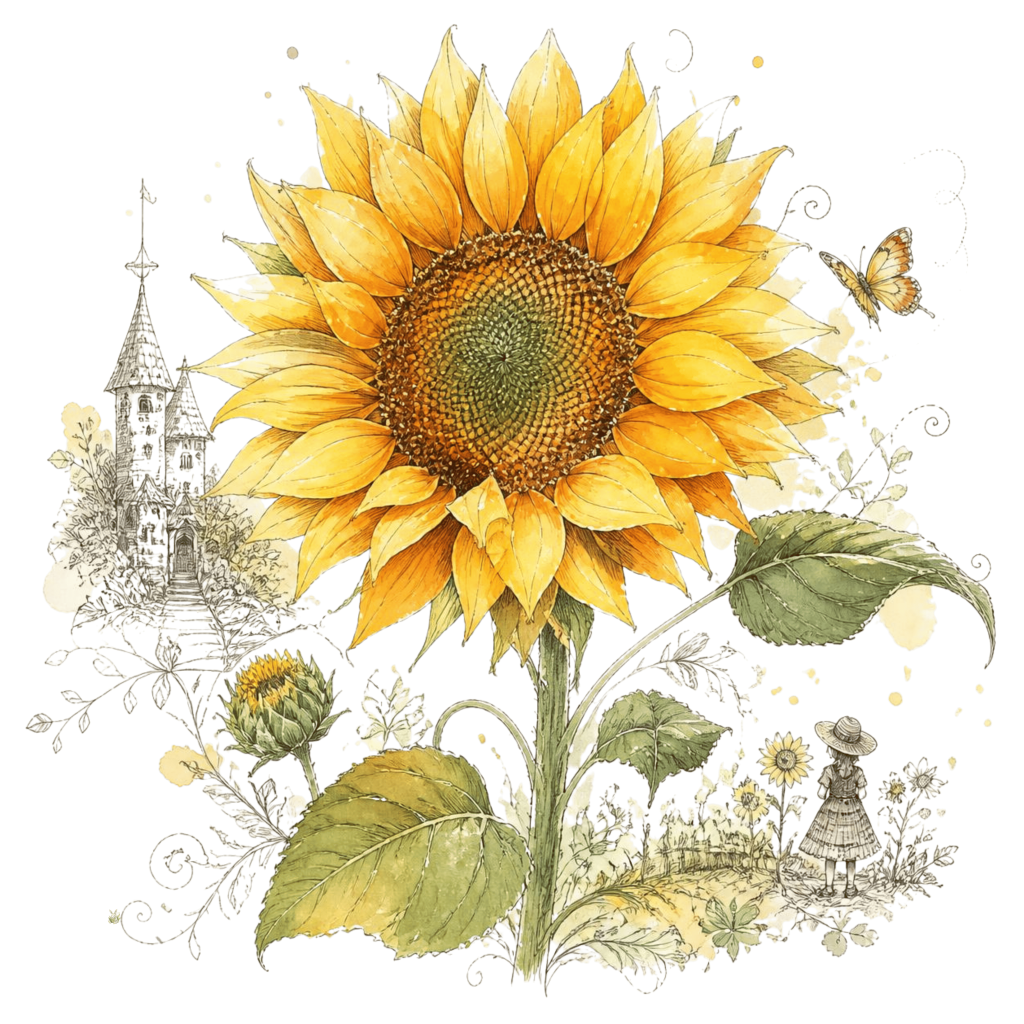
There is something impossible to ignore about a sunflower. With its golden face turned toward the light, it has become a universal symbol of happiness, hope, and unwavering optimism. Whether growing beside a weathered cottage fence or stretching across vast summer fields, the sunflower reminds us that beauty often comes from simply following the light.
For centuries, this remarkable flower has inspired artists, poets, gardeners, and storytellers. Beyond its cheerful appearance lies a rich history filled with myths, folklore, and quiet symbolism that continues to bloom in gardens around the world.
History & Symbolism
Sunflowers (Helianthus annuus) originated in North America, where Indigenous peoples cultivated them thousands of years ago as an important source of food, oil, medicine, and natural dyes. Long before they became beloved garden flowers, they were valued as practical plants that sustained entire communities.
When Spanish explorers brought sunflower seeds to Europe in the sixteenth century, the flower quickly became admired for its impressive height and radiant golden blooms. It soon found its place in monastery gardens, country estates, and eventually the charming cottage gardens that still treasure it today.
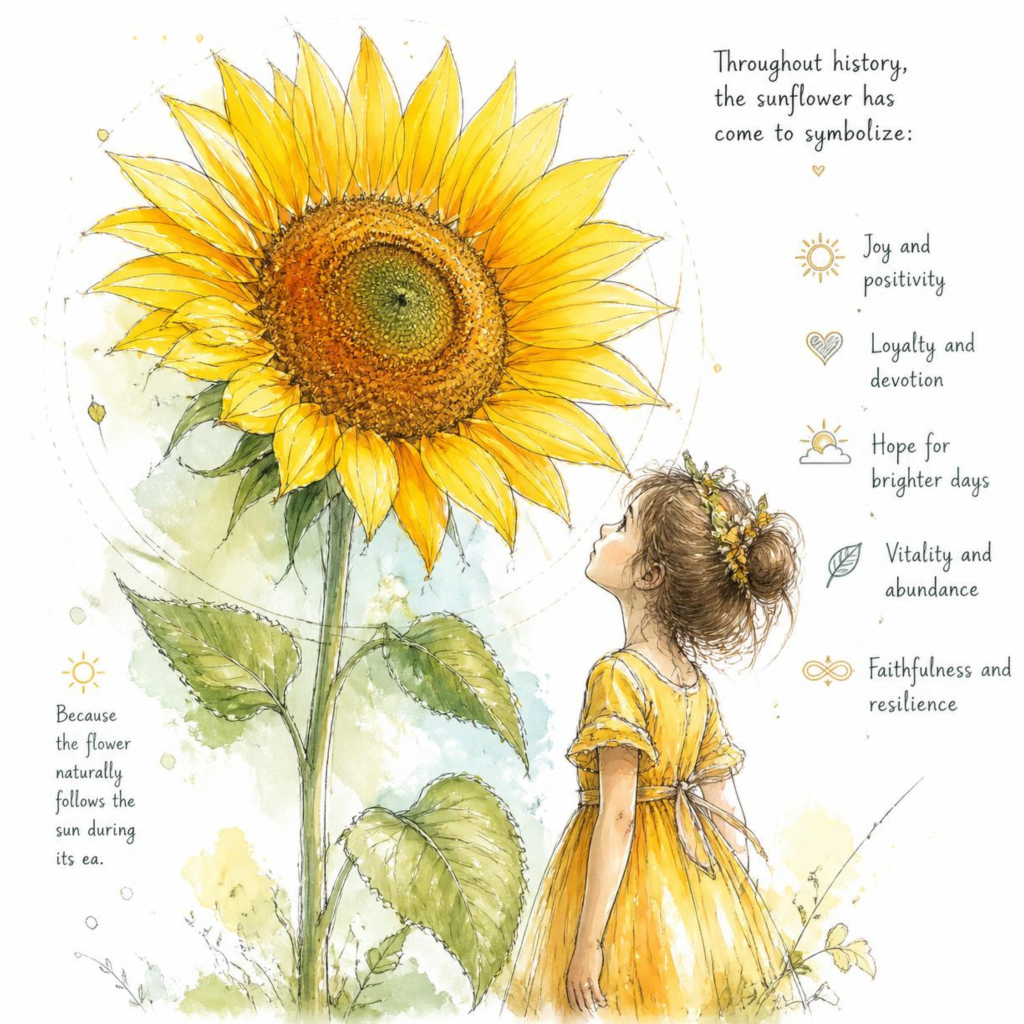
Throughout history, the sunflower has come to symbolize:
- Joy and positivity
- Loyalty and devotion
- Hope for brighter days
- Vitality and abundance
- Faithfulness and resilience
Because the flower naturally follows the sun during its early stages of growth, it became a timeless emblem of seeking light even after darkness.
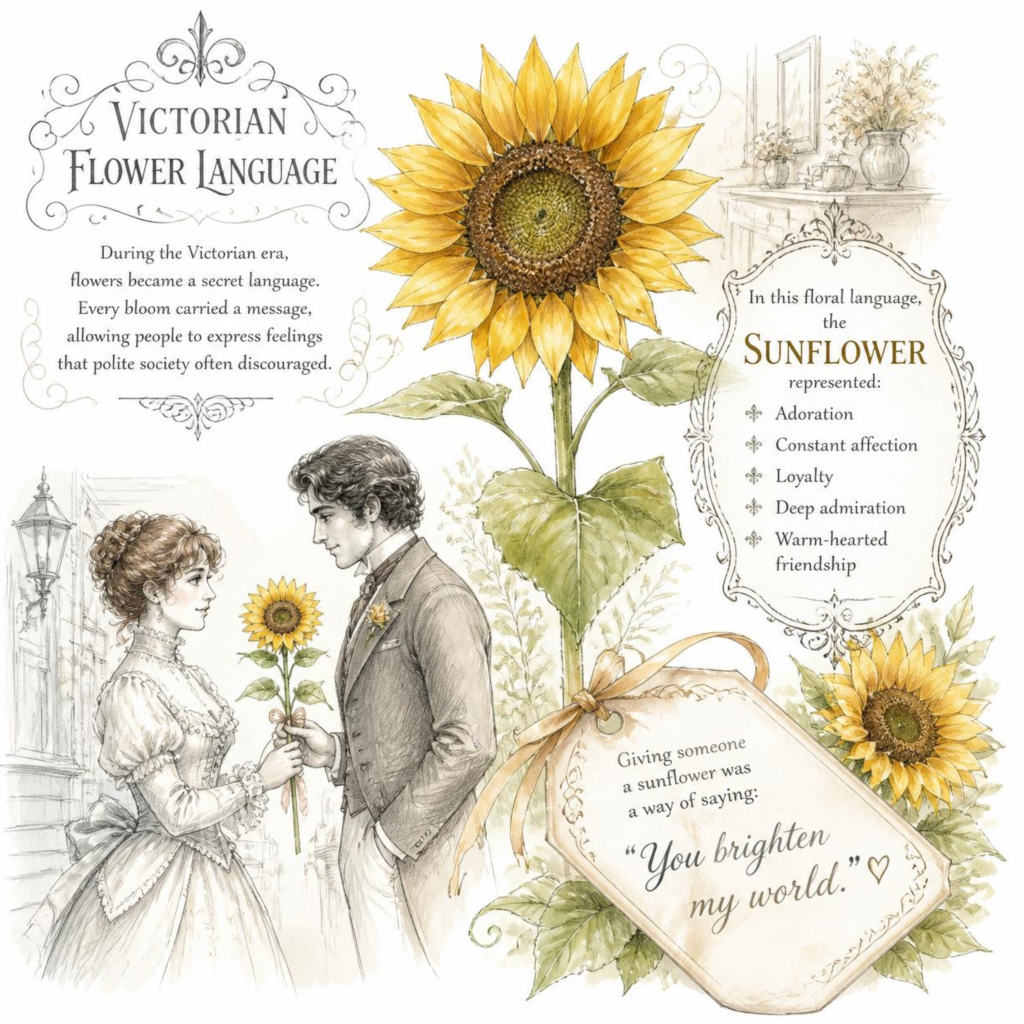
Victorian Flower Language
During the Victorian era, flowers became a secret language. Every bloom carried a message, allowing people to express feelings that polite society often discouraged.
In this floral language, the sunflower represented:
- Adoration
- Constant affection
- Loyalty
- Deep admiration
- Warm-hearted friendship
Giving someone a sunflower was a way of saying:
“You brighten my world.”
or
“My thoughts always turn toward you.”
Sunflowers in Folklore
Many cultures created legends to explain why sunflowers always face the sun.
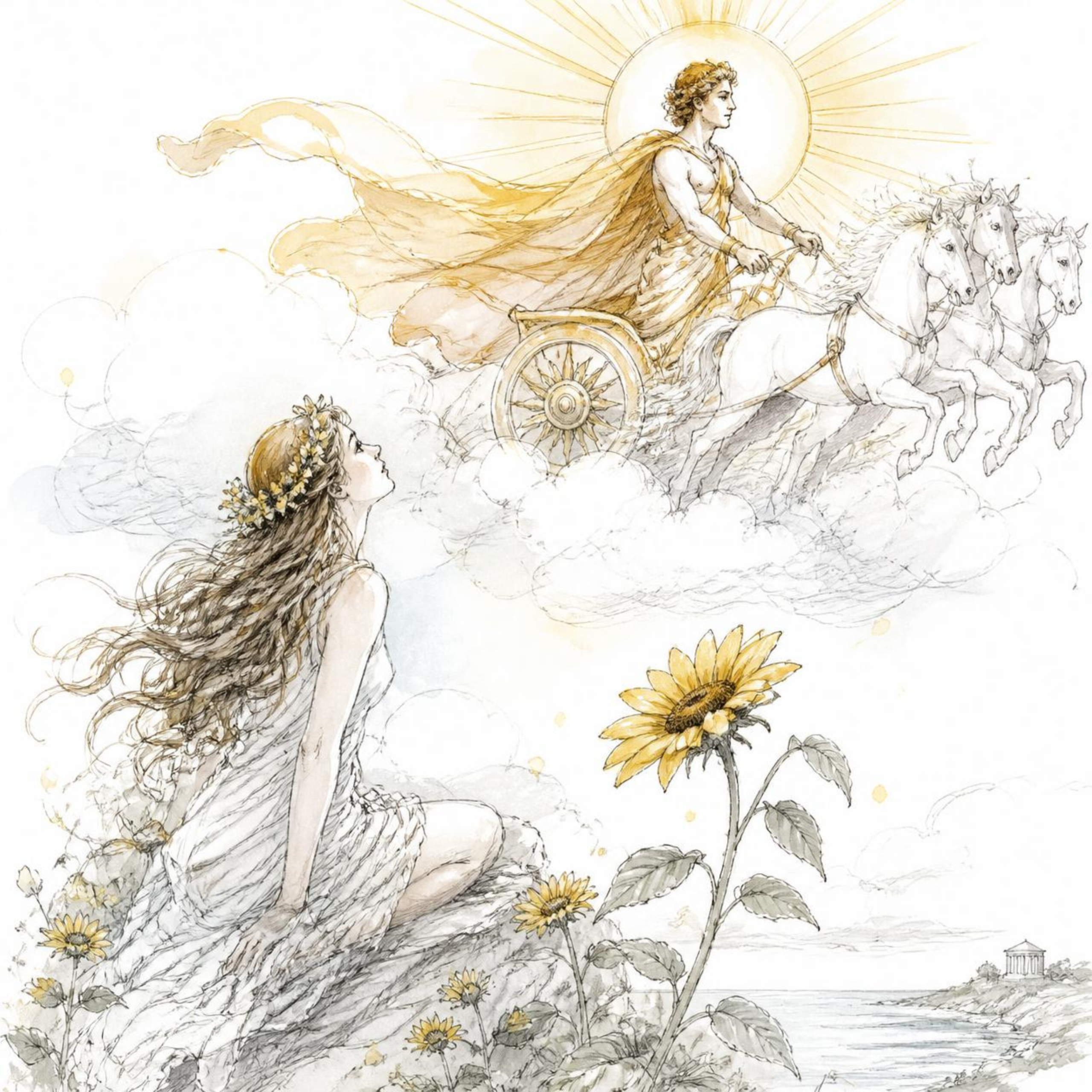
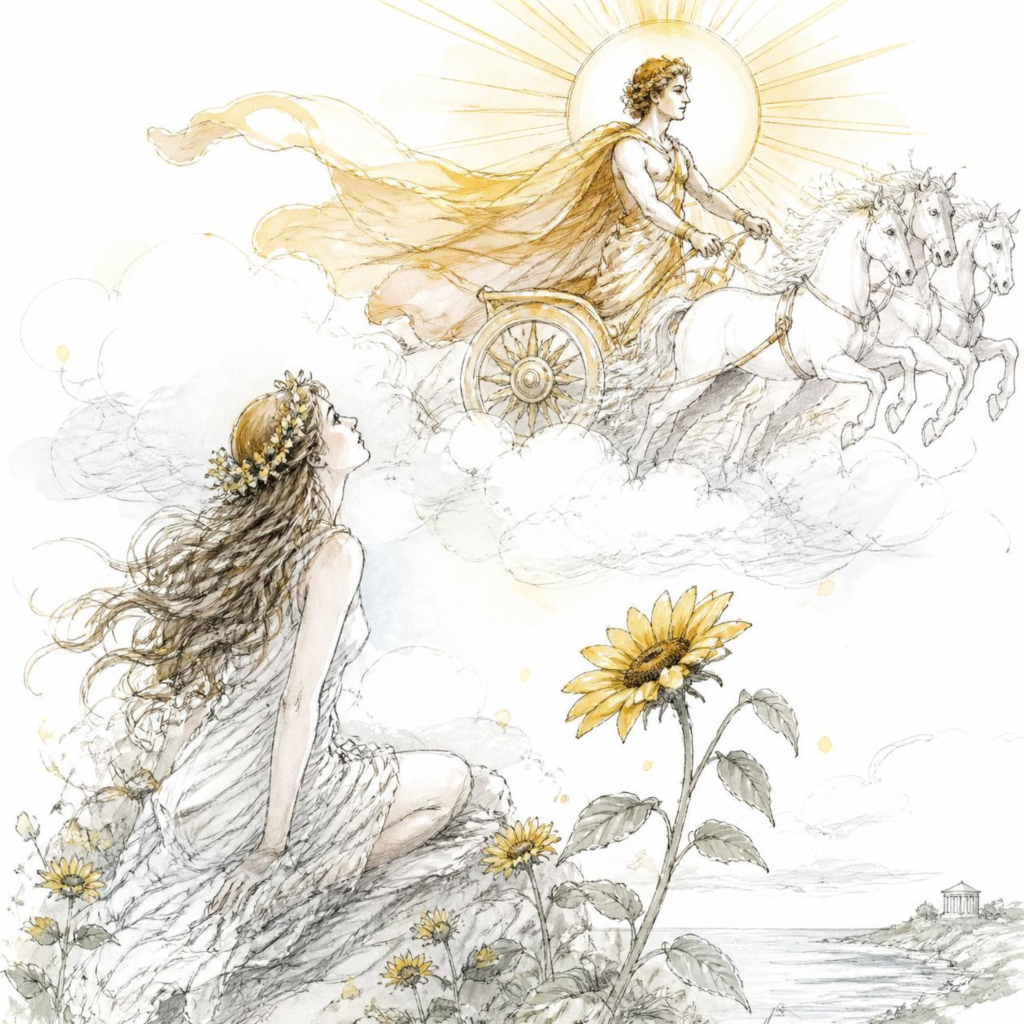
One of the oldest stories comes from Greek mythology, where the water nymph Clytie fell deeply in love with the sun god Helios. Day after day she watched him cross the sky until she herself was transformed into a flower that forever turned toward the sunlight.
Across Europe, country folklore believed sunflowers protected homes from misfortune. Their bright blooms were planted near gates, fences, and cottage doors as symbols of warmth, prosperity, and welcome.
Some old traditions even claimed that carrying sunflower seeds would attract good fortune and encourage honest friendships.
Woodland Whisper
Woodland Whisper
Old cottage folk say the tallest sunflower is never truly watching the sun.
Instead, it waits patiently for the very first golden light of morning, hoping to greet the new day before any other flower awakens.
If you whisper a hopeful wish into a sunflower at sunrise, the flower keeps it safely hidden until the evening breeze carries it gently across the fields.
Whether the wish comes true, no one can say.
But every sunflower seems to smile as though it remembers.
Sunflowers in Cottage Gardens
Few flowers capture the charm of a cottage garden quite like the sunflower.
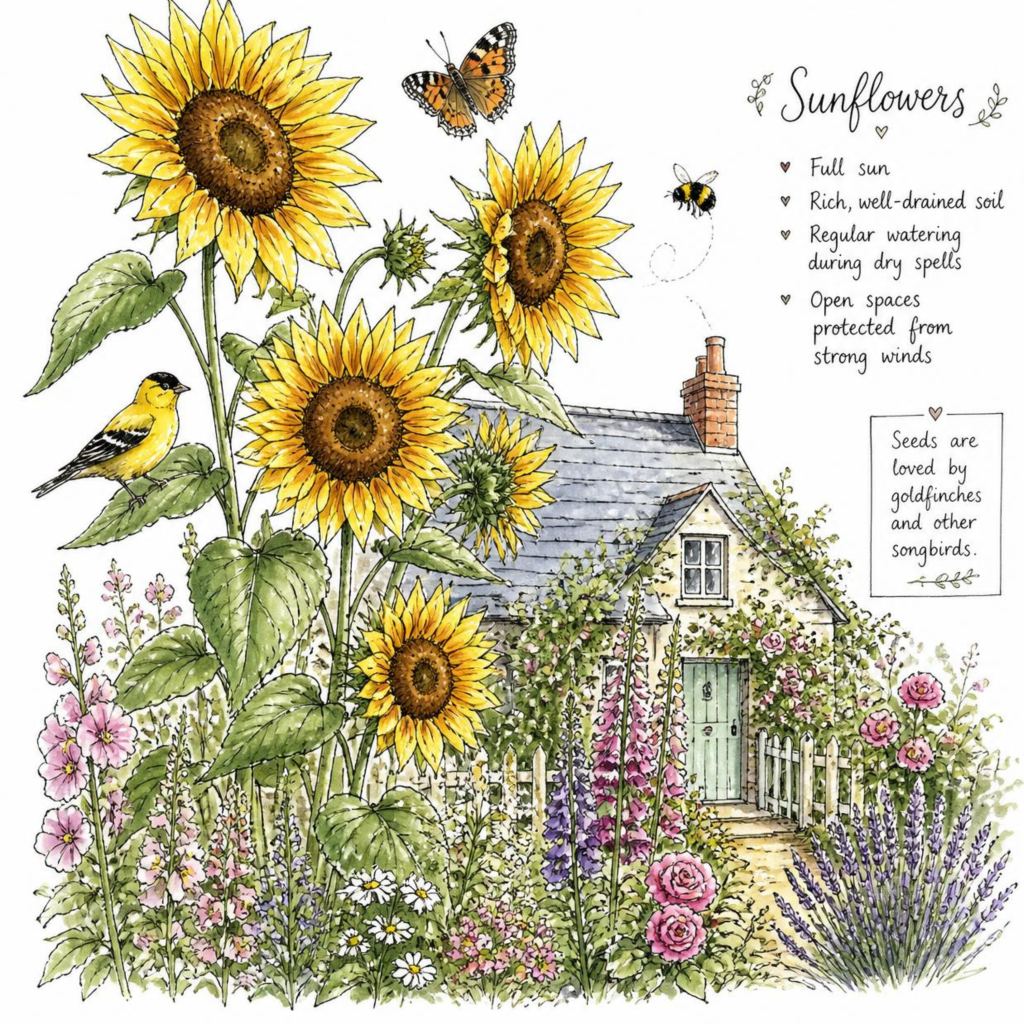
Their towering stems create natural height behind roses, foxgloves, hollyhocks, and lavender, while their cheerful blooms attract bees, butterflies, and countless garden birds.
Sunflowers thrive in:
- Full sun
- Rich, well-drained soil
- Regular watering during dry spells
- Open spaces protected from strong winds
Many varieties also produce seeds loved by goldfinches and other songbirds, making them one of the most wildlife-friendly flowers you can grow.
Interesting Sunflower Facts
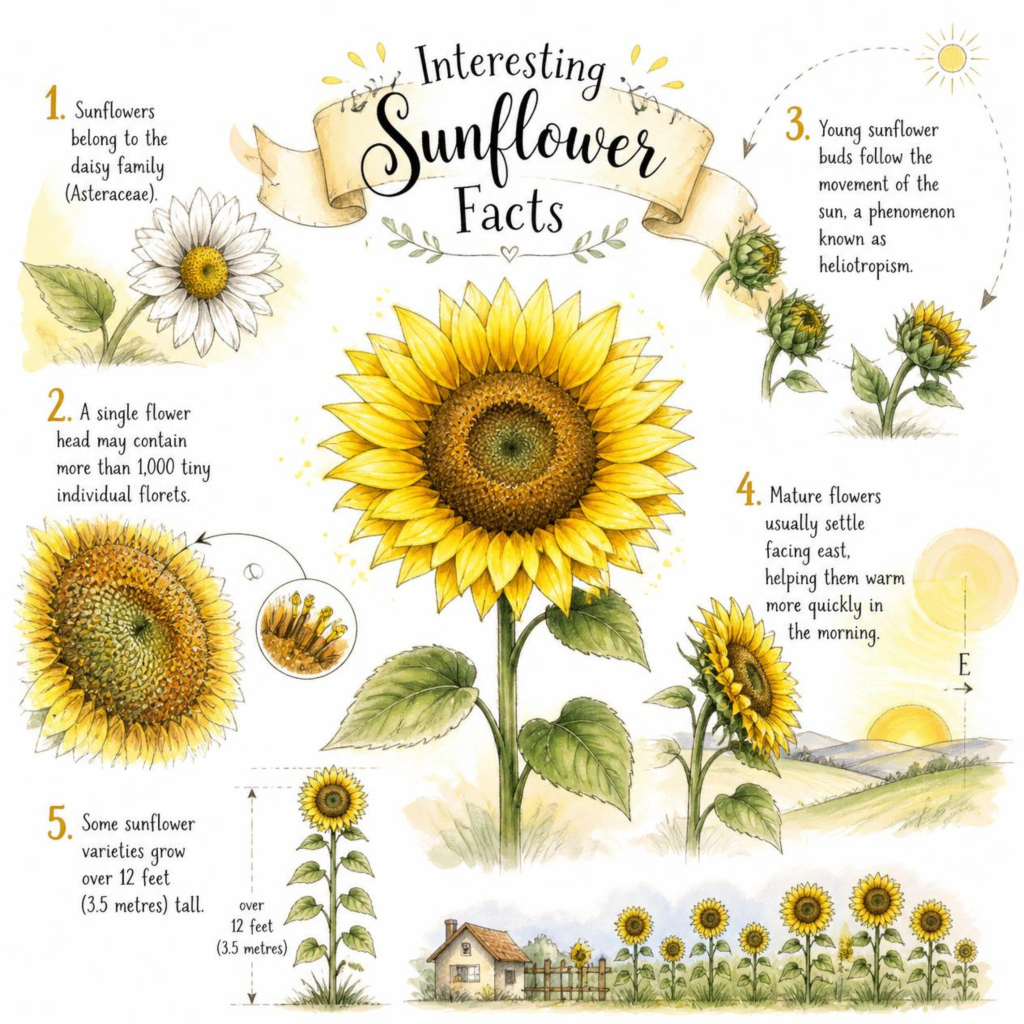
- Sunflowers belong to the daisy family (Asteraceae).
- A single flower head may contain more than 1,000 tiny individual florets.
- Young sunflower buds follow the movement of the sun, a phenomenon known as heliotropism.
- Mature flowers usually settle facing east, helping them warm more quickly in the morning.
- Some sunflower varieties grow over 12 feet (3.5 metres) tall.
Why We Still Love Sunflowers
Some flowers whisper quietly.
Sunflowers shine.
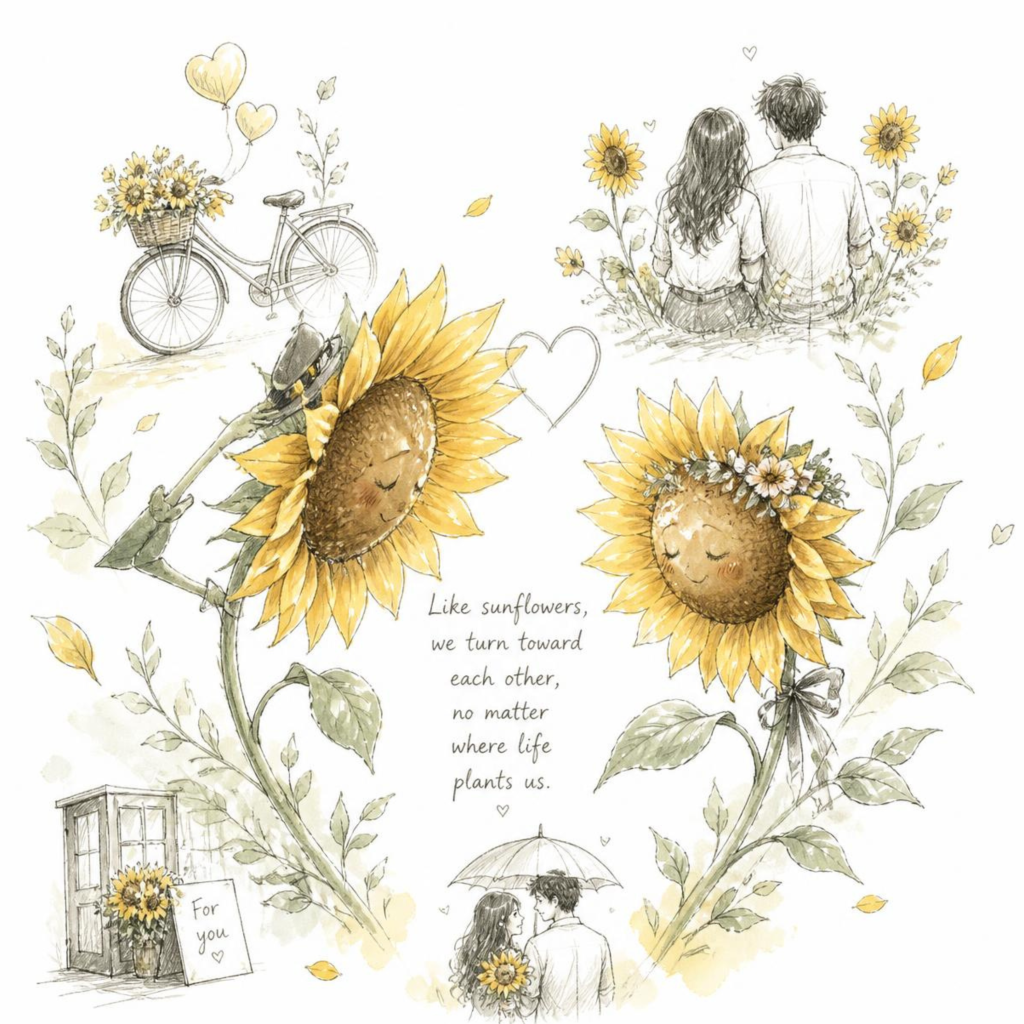
They remind us to look upward, welcome brighter days, and find beauty even after difficult seasons. Their golden faces have watched over gardens, farmhouses, and country lanes for centuries, carrying with them stories of hope, resilience, and simple happiness.
Perhaps that is why no matter where they bloom, sunflowers never feel ordinary.
They always seem to bring a little sunshine with them.
Final Thoughts
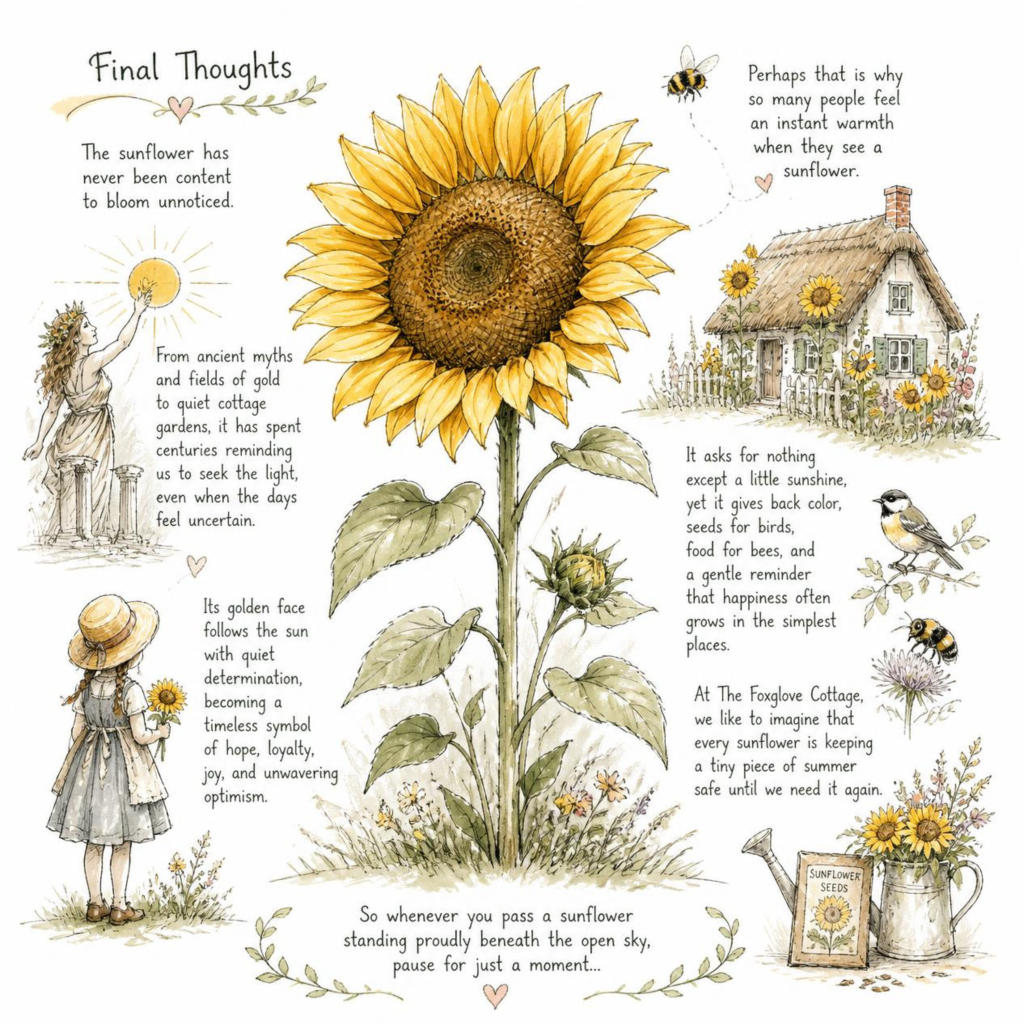
The sunflower has never been content to bloom unnoticed.
From ancient myths and fields of gold to quiet cottage gardens, it has spent centuries reminding us to seek the light, even when the days feel uncertain. Its golden face follows the sun with quiet determination, becoming a timeless symbol of hope, loyalty, joy, and unwavering optimism.
Perhaps that is why so many people feel an instant warmth when they see a sunflower. It asks for nothing except a little sunshine, yet it gives back color, seeds for birds, food for bees, and a gentle reminder that happiness often grows in the simplest places.
At The Foxglove Cottage, we like to imagine that every sunflower is keeping a tiny piece of summer safe until we need it again.
So whenever you pass a sunflower standing proudly beneath the open sky, pause for just a moment…
It may be quietly whispering,
“Keep turning toward the light.” 🌻