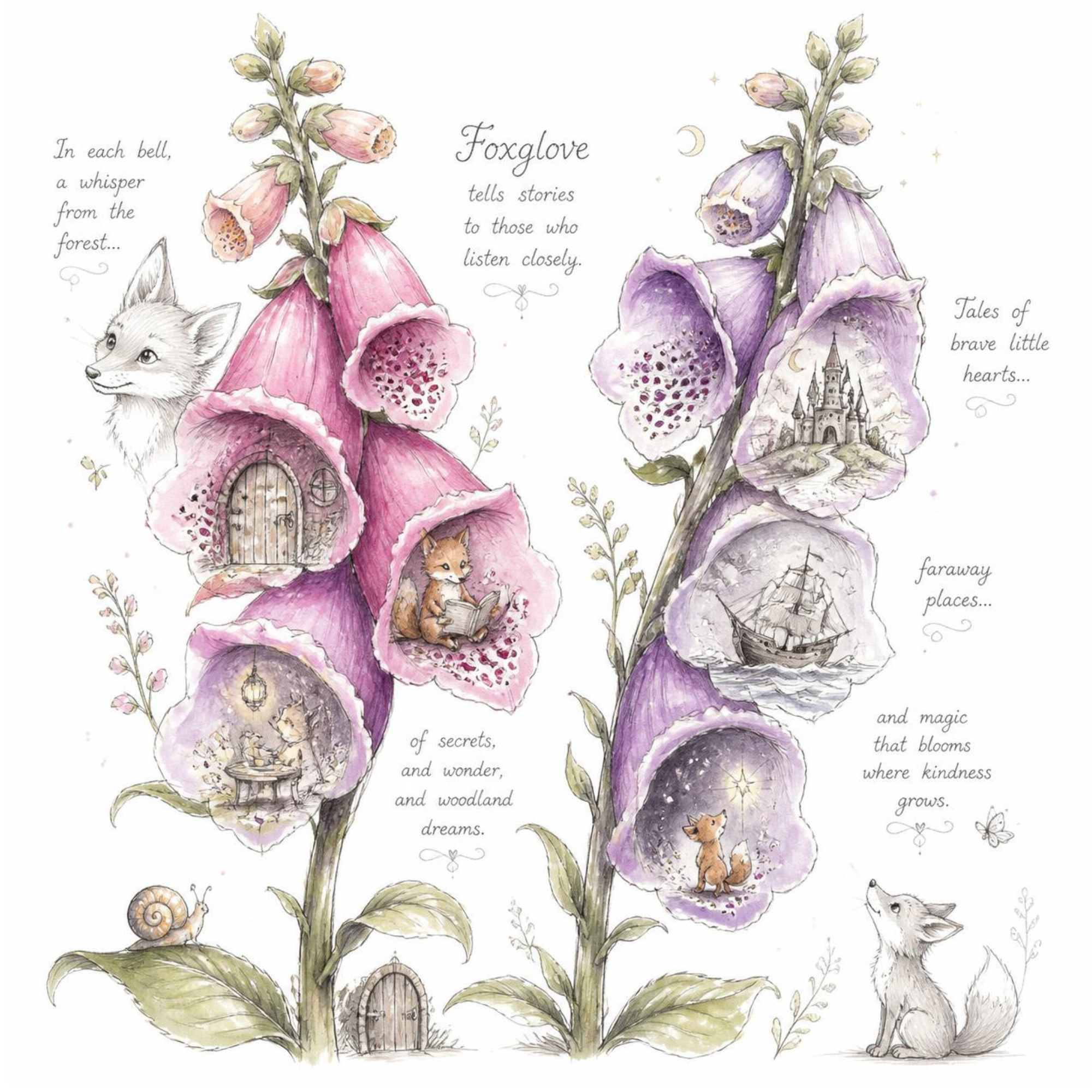
Foxglove
Foxglove Meaning & Symbolism: Folklore, Victorian Flower Language, Cottage Garden Guide & Growing Tips
Elegant, mysterious and impossible to ignore, the foxglove has enchanted gardeners, storytellers and artists for centuries. Rising like a tower of delicate bells, it brings a touch of woodland magic to every cottage garden. But beneath its breathtaking beauty lies a fascinating history filled with folklore, fairy tales and surprising symbolism.
What Does Foxglove Symbolize?
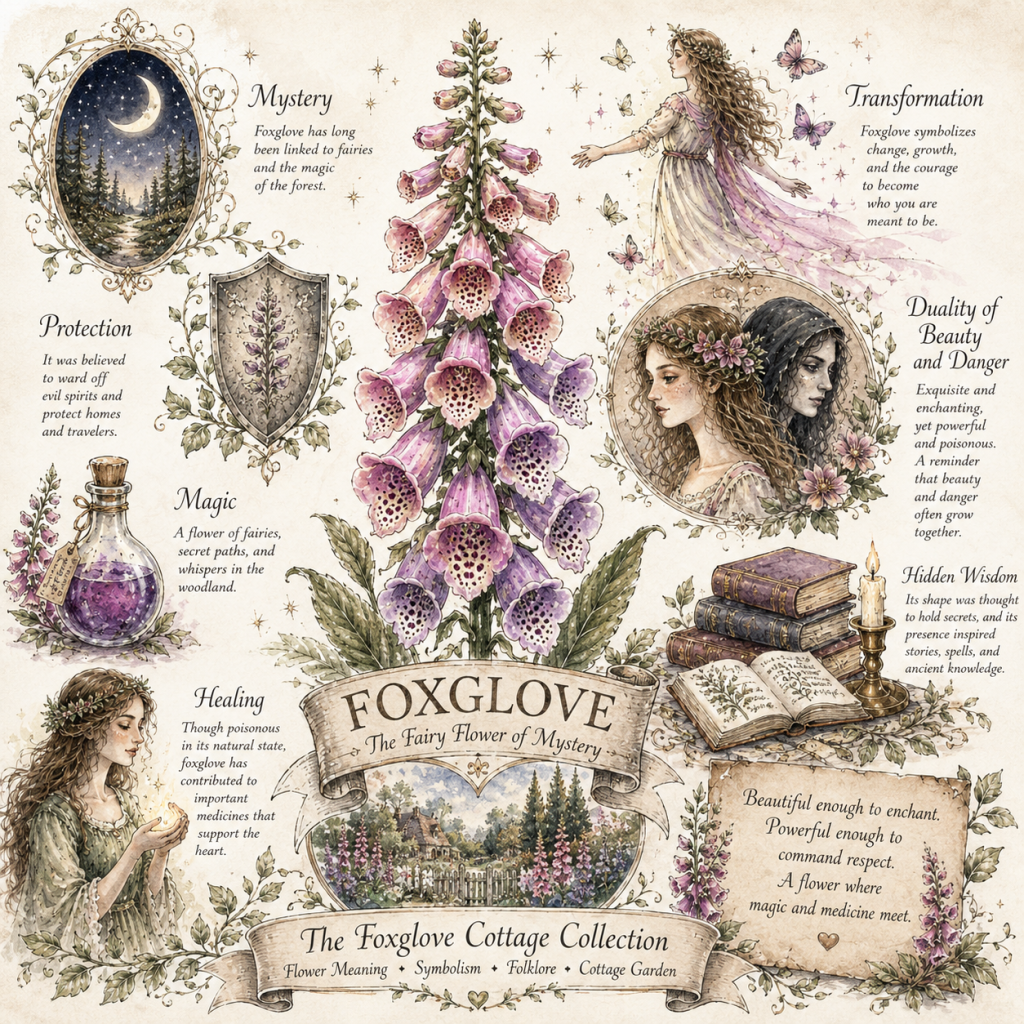
The foxglove symbolizes:
- Mystery
- Protection
- Magic
- Healing
- Transformation
- Duality of beauty and danger
- Hidden wisdom
- Respect for nature
Its graceful bell-shaped flowers have inspired countless legends throughout Europe. While admired for its beauty, the foxglove also reminds us that appearances can be deceiving. It is one of nature’s most beautiful yet most poisonous flowers.
The Meaning Behind the Name
The name Foxglove has inspired many theories.
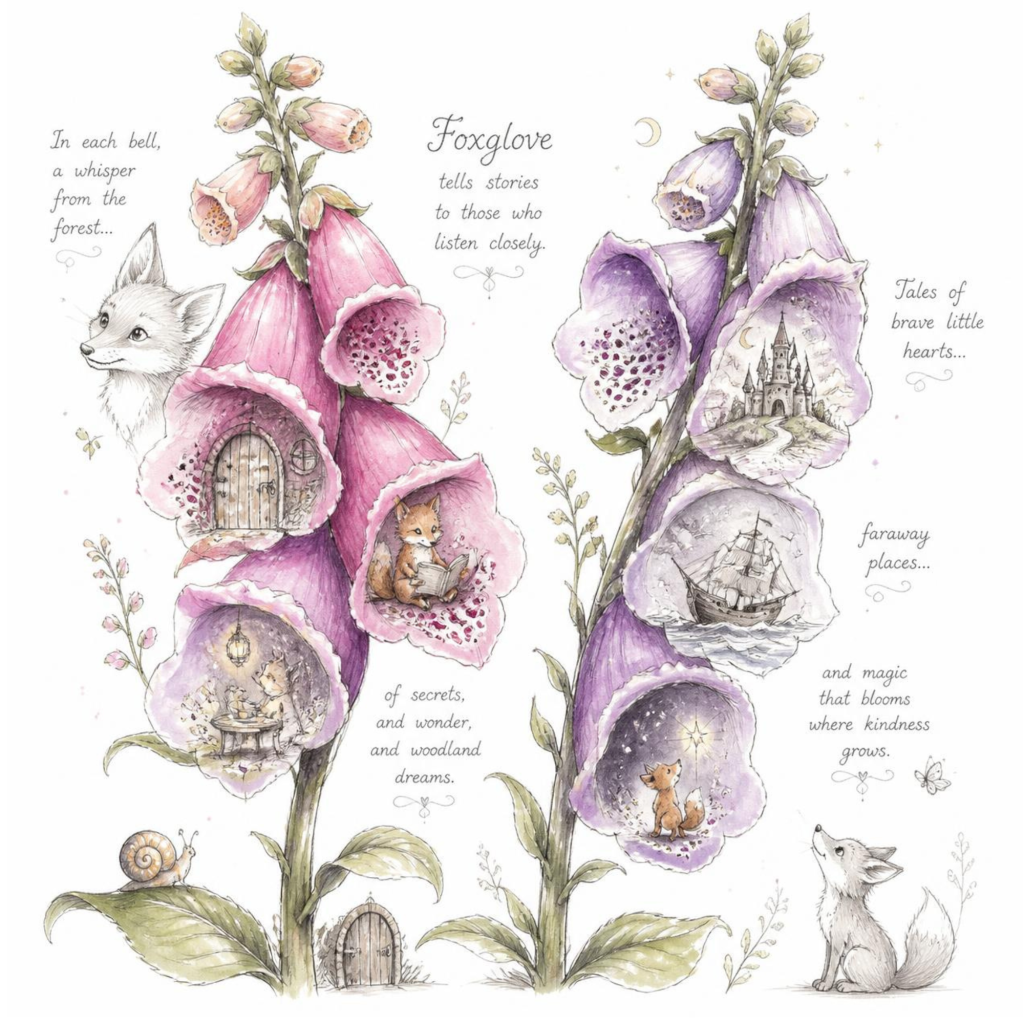
One of the oldest legends says foxes wore the flowers like tiny gloves to silently sneak through the forest without making a sound. Another tale claims fairies gifted the blossoms to foxes as magical footwear.
The scientific name, Digitalis purpurea, comes from the Latin word digitus, meaning “finger,” because each flower resembles a tiny finger-shaped thimble.
Foxglove in Folklore
Across Britain, Ireland and Northern Europe, foxgloves have long been linked with fairies.
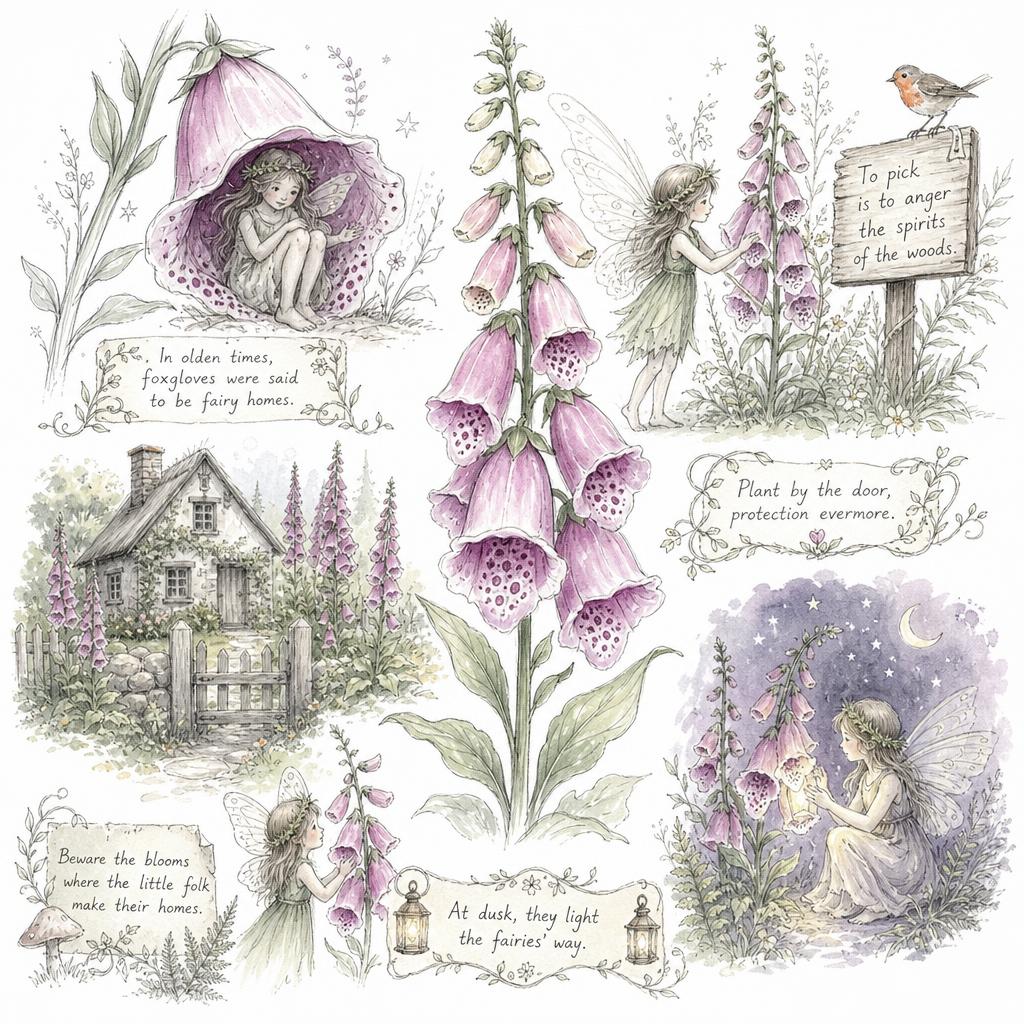
People believed that:
- Fairies hid inside the flowers.
- Picking foxgloves could anger woodland spirits.
- Planting them near a cottage offered magical protection.
- The flowers acted as tiny lanterns for fairies at dusk.
Many old folk stories warned children never to disturb a patch of blooming foxgloves, believing invisible woodland creatures called them home.
A Beautiful but Dangerous Flower
Foxglove is famous for its striking appearance, but it deserves respect.
Every part of the plant is poisonous if eaten.
Despite this, foxglove has played an important role in medicine. Compounds from Digitalis have been used for centuries to help treat certain heart conditions when prepared by medical professionals.
It is a perfect reminder that nature often balances beauty with great power.
Foxglove in the Language of Flowers
In Victorian floriography, foxglove carried several meanings:
- Insincerity
- Ambition
- Confidence
- Creativity
- Hidden feelings
Today, many people also associate it with:
- Inner strength
- Personal transformation
- Quiet confidence
- Mystery
- Enchantment
Foxglove in Cottage Gardens
Foxgloves are one of the signature plants of the classic English cottage garden.
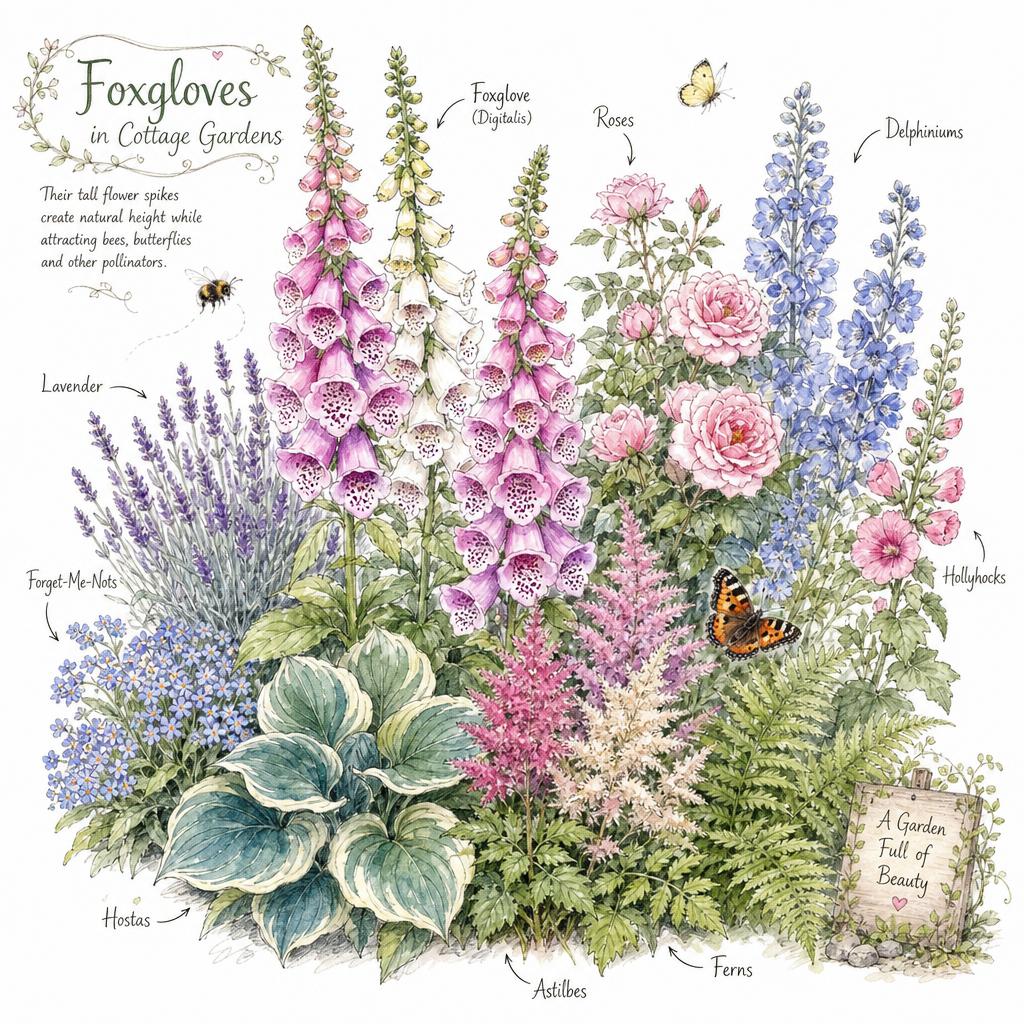
They pair beautifully with:
- Roses
- Delphiniums
- Lavender
- Forget-Me-Nots
- Hollyhocks
- Ferns
- Foxglove’s woodland companions such as hostas and astilbes
Their tall flower spikes create natural height while attracting bees, butterflies and other pollinators.
Growing Foxglove
Botanical Name: Digitalis purpurea
Plant Type: Biennial (sometimes short-lived perennial)
Sunlight: Full sun to partial shade
Soil: Rich, moist, well-drained
Bloom Time: Late spring to midsummer
Height: 90 to 180 cm (3 to 6 ft)
Hardiness: USDA Zones 4 to 9
Growing Tips
- Sow seeds in late spring or early summer.
- Keep soil consistently moist.
- Allow some flowers to self-seed for natural woodland drifts.
- Wear gloves when handling the plant.
- Keep away from children and pets.
Foxglove in Art & Cottagecore
Few flowers capture the spirit of cottagecore quite like the foxglove.
Its elegant stems, soft pastel colors and fairy-tale associations make it a favorite in watercolor illustrations, botanical art, embroidery and woodland-inspired decor. Whether blooming in a quiet garden or appearing in whimsical illustrations, foxglove always brings a sense of mystery and timeless beauty.
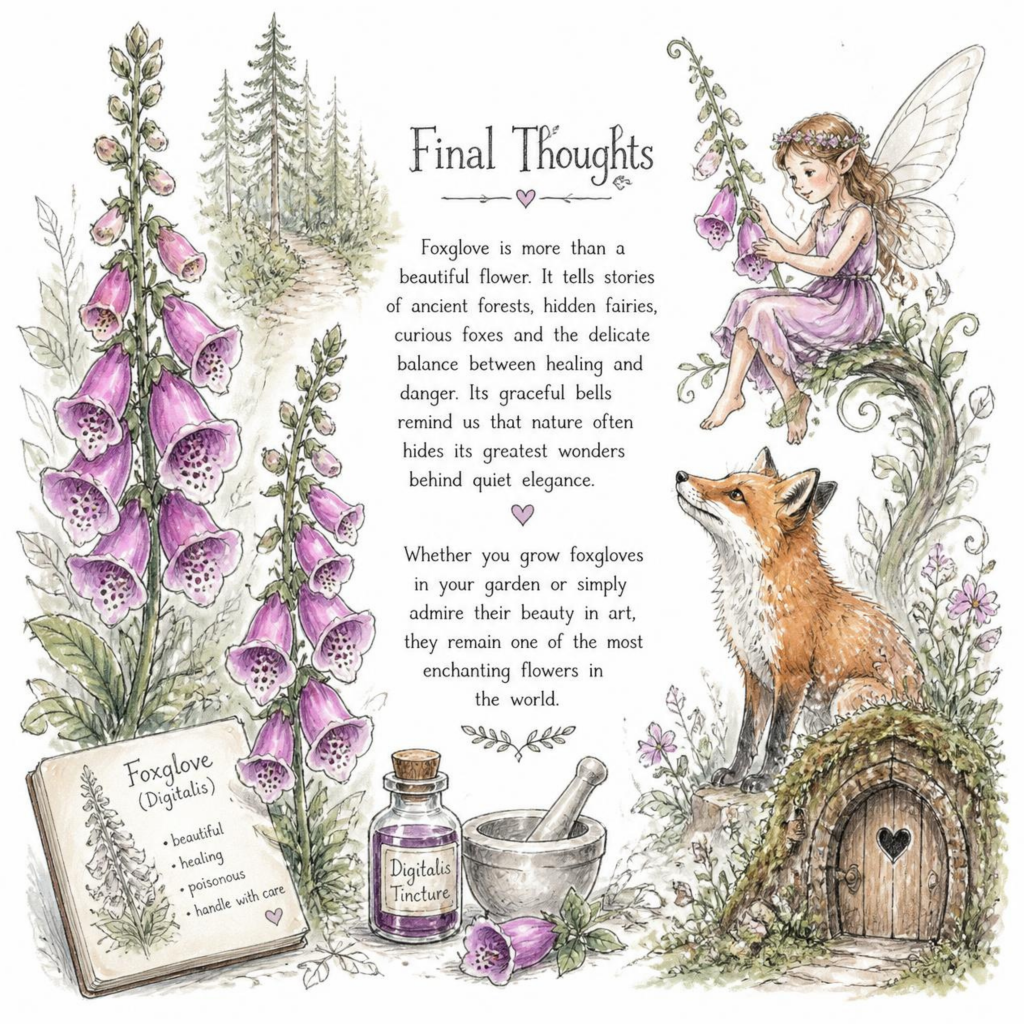
Final Thoughts
Foxglove is more than a beautiful flower.
It tells stories of ancient forests, hidden fairies, curious foxes and the delicate balance between healing and danger. Its graceful bells remind us that nature often hides its greatest wonders behind quiet elegance.
Whether you grow foxgloves in your garden or simply admire their beauty in art, they remain one of the most enchanting flowers in the world.